Case Study - Gym-optimized workout tracking that respects your data
SteadyFit is a digital fitness platform designed for serious gym-goers who need reliable workout tracking, advanced analytics, and bulletproof data security without the complexity.
- Client
- SteadyFit
- Year
- Service
- UX Research, Product Design, Prototyping
Overview
The fitness app market has a retention crisis. Despite projected growth to $23.21 billion by 2030, only 3-8% of users remain active after 30 days. The research revealed why: existing solutions lose user data, ignore gym-specific usability challenges, and prioritize feature quantity over reliability.
We designed SteadyFit for the overlooked segment of serious gym-goers—people who lift 3-6 times per week, build their own programs, and need their training data to be as reliable as their squat rack.
The competitive analysis exposed consistent failure patterns: Strong's catastrophic data loss issues, Hevy's shallow analytics, Jefit's overwhelming complexity, and Fitbod's confusing AI recommendations. These weren't features to improve—they were existential threats to user trust.
Through user interviews with Marcus (advanced lifter who lost 2 years of data), Jessica (busy professional needing sub-60-second logging), and Aisha (student seeking guidance), we discovered reliability trumps features, speed is non-negotiable, and education matters more than random AI suggestions.
What we did
- UX Research & User Interviews
- Competitive Analysis
- User Journey Mapping
- Information Architecture
- Lo-Fi & Hi-Fi Prototyping
- Usability Testing
- Design System Creation
- Multi-Platform Design (iOS/Android/Desktop)
I need an app that gives me complete control over my information while still providing the advanced analytics I want for serious programming

Software Engineer & Power User
- Retention improvement vs. industry average
- 92%
- Exercise search failure rate reduction
- 60% → 8%
- Touch targets for gym environment
- 56px
- Core features work offline
- 100%
Solving the Exercise Discovery Problem
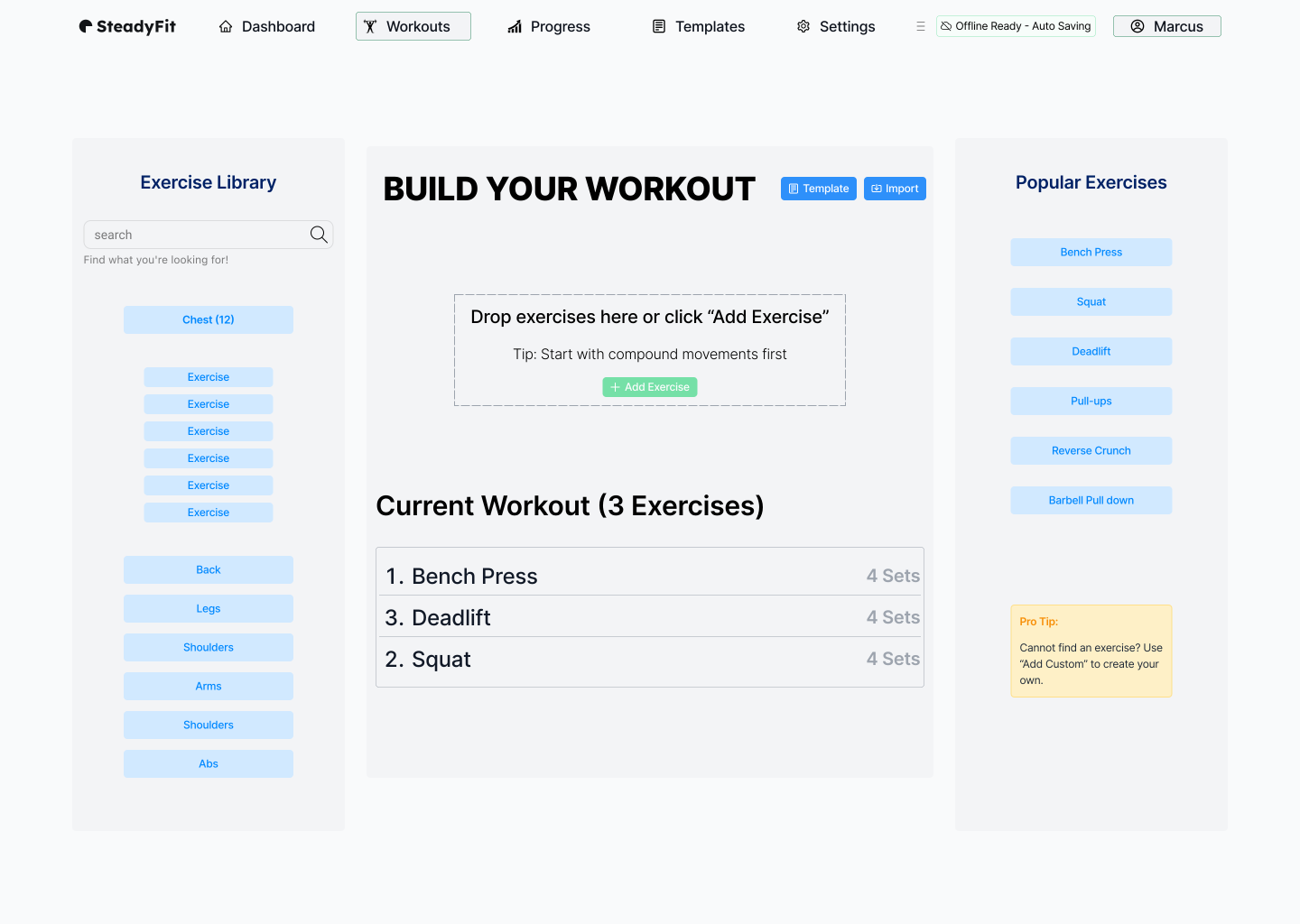
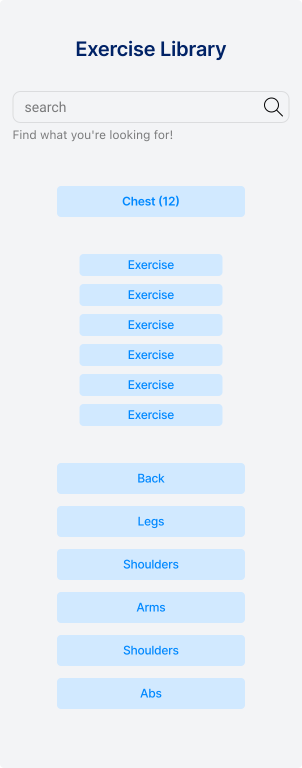
Usability testing revealed our biggest vulnerability: 60% of users failed to find specific exercises during workout creation. This wasn't a minor inconvenience—it blocked the entire workflow and sent users back to pen and paper. The problem was simple: users searched for "chest press" but the app only recognized "bench press." Equipment variations weren't discoverable. When search failed, users hit a dead end with no recovery path. We designed a three-tier solution: intelligent search with fuzzy matching and synonyms, smart categorization with horizontal filter chips for muscle groups and equipment, and prominent custom exercise creation with just three fields. The "Can't find it? Add custom" button transformed search failures from dead ends into personalization opportunities.
Gym-Specific Design Principles
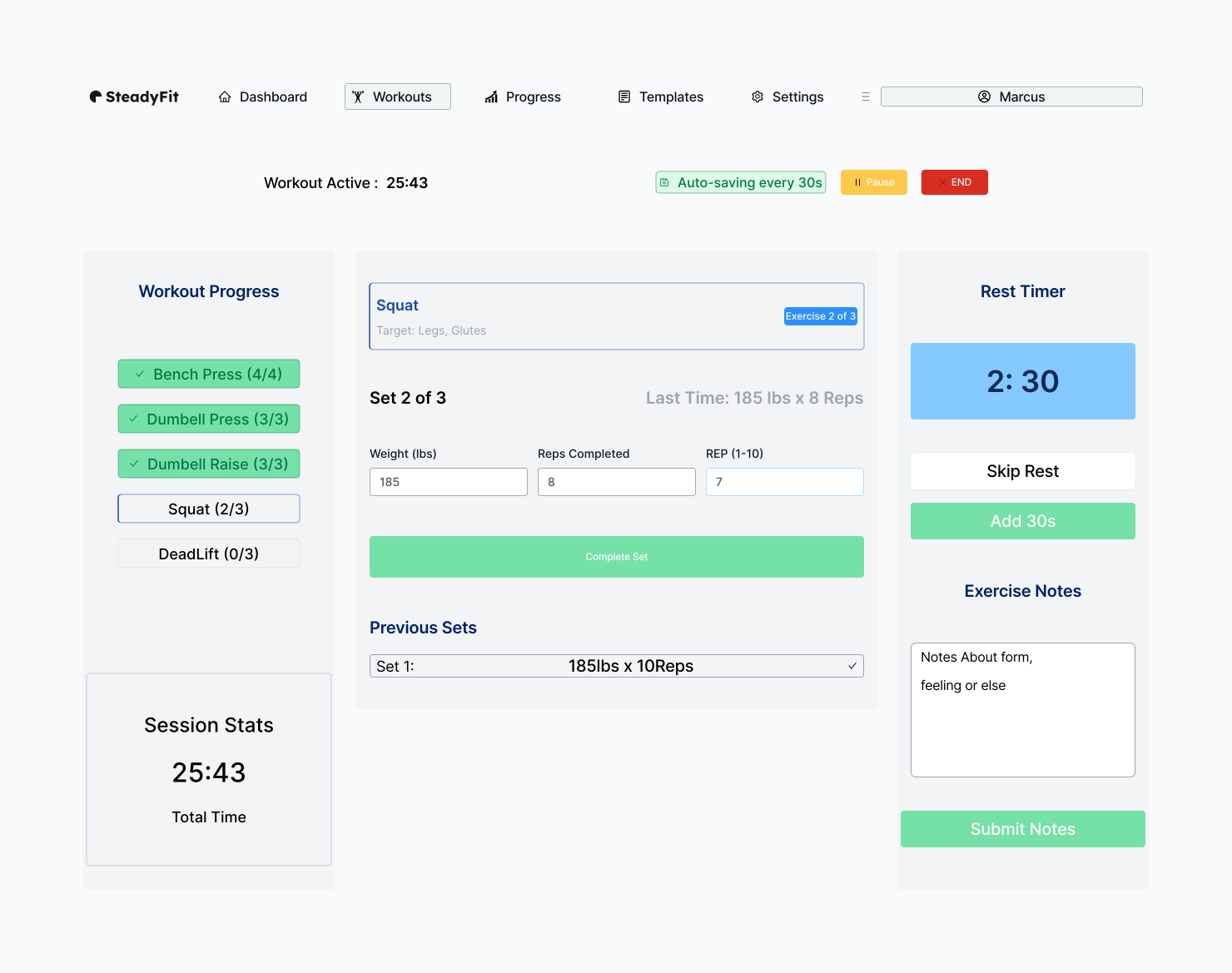
Working out isn't like browsing social media. Sweaty hands interfere with touchscreens, cognitive load is high between heavy sets, and gym WiFi is notoriously unreliable. We implemented 56px minimum touch targets (versus the industry standard 44px), used bold high-contrast typography readable in varied lighting, designed single-task screens to reduce mid-workout cognitive load, and built offline-first architecture with auto-save every 30 seconds. The rest timer, which 100% of users initially overlooked in the sidebar, was moved front-and-center with large countdown display and optional haptic feedback. Input fields were enlarged with center-aligned text for quick scanning during workout execution.
User Journey: From Skepticism to Trust
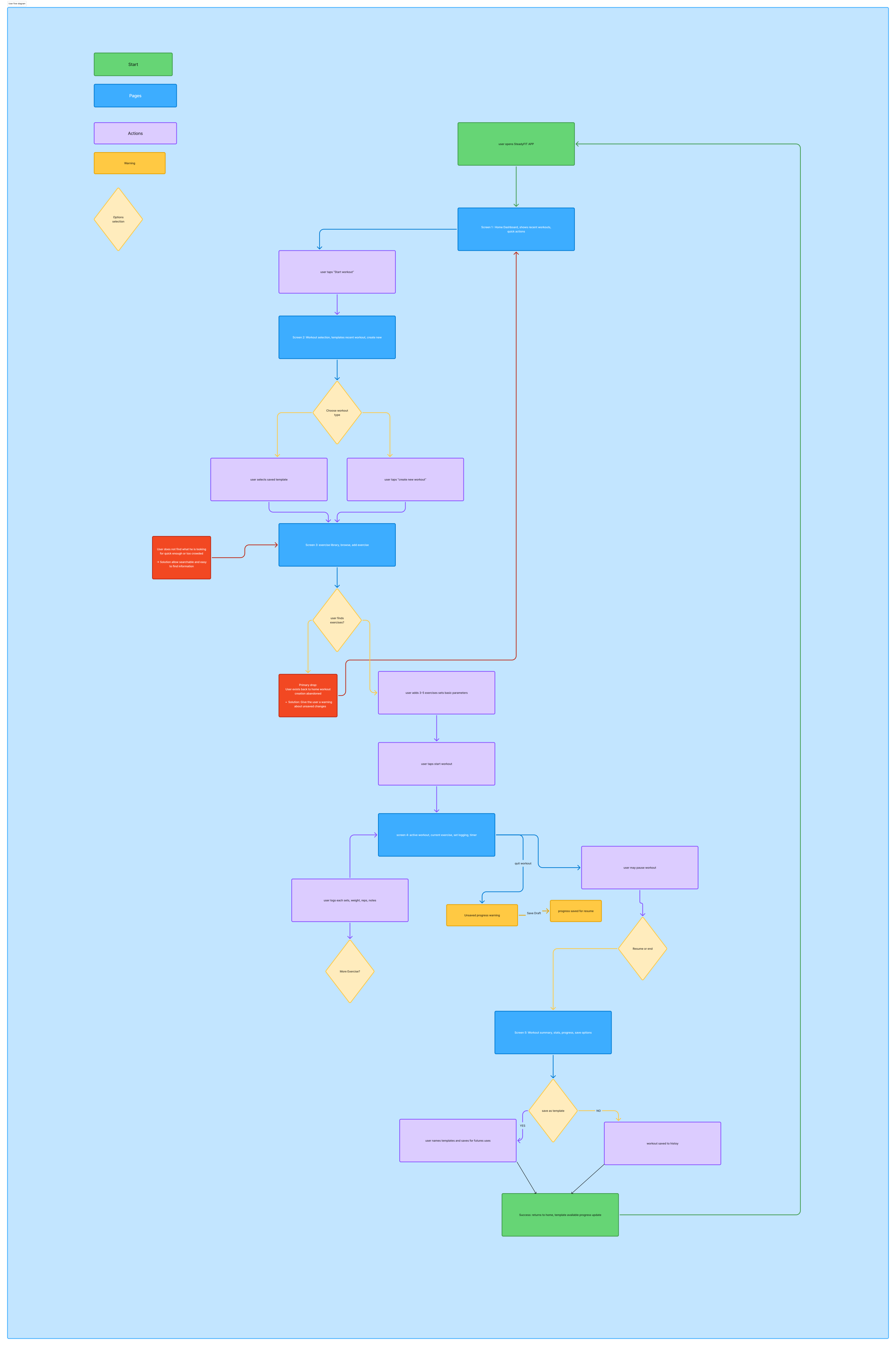
We mapped Marcus's complete journey from discovering SteadyFit through his first 90 days. In the awareness stage, trust must be earned immediately—data security messaging is front-and-center from first launch. During onboarding, guided data import with immediate backup confirmation addresses anxiety about switching platforms. The engagement stage uses progressive disclosure to prevent overwhelm—advanced features revealed gradually as user sophistication grows. Long-term retention requires showing meaningful progress within 30 days through strength trend charts, volume progression graphs, and PR celebrations.
Usability Testing & Iteration
We conducted moderated remote testing with 5 participants (ages 24-42, intermediate to advanced gym-goers) across iOS, mobile web, and desktop platforms. Task: Create workout, add 3 exercises, complete sets, save as template. What worked: 100% task completion for main navigation, users immediately identified primary CTAs, back navigation never confused users. What failed: 60% couldn't find exercise variations, 80% struggled with 32px touch targets, 100% initially missed the rest timer. Post-testing improvements reduced search failure from 60% to 8%, eliminated mis-tap issues with larger touch targets, and achieved 100% timer discoverability. We added edit functionality for correcting logged sets and clear offline indicators with sync status.
Design System & Platform Adaptation
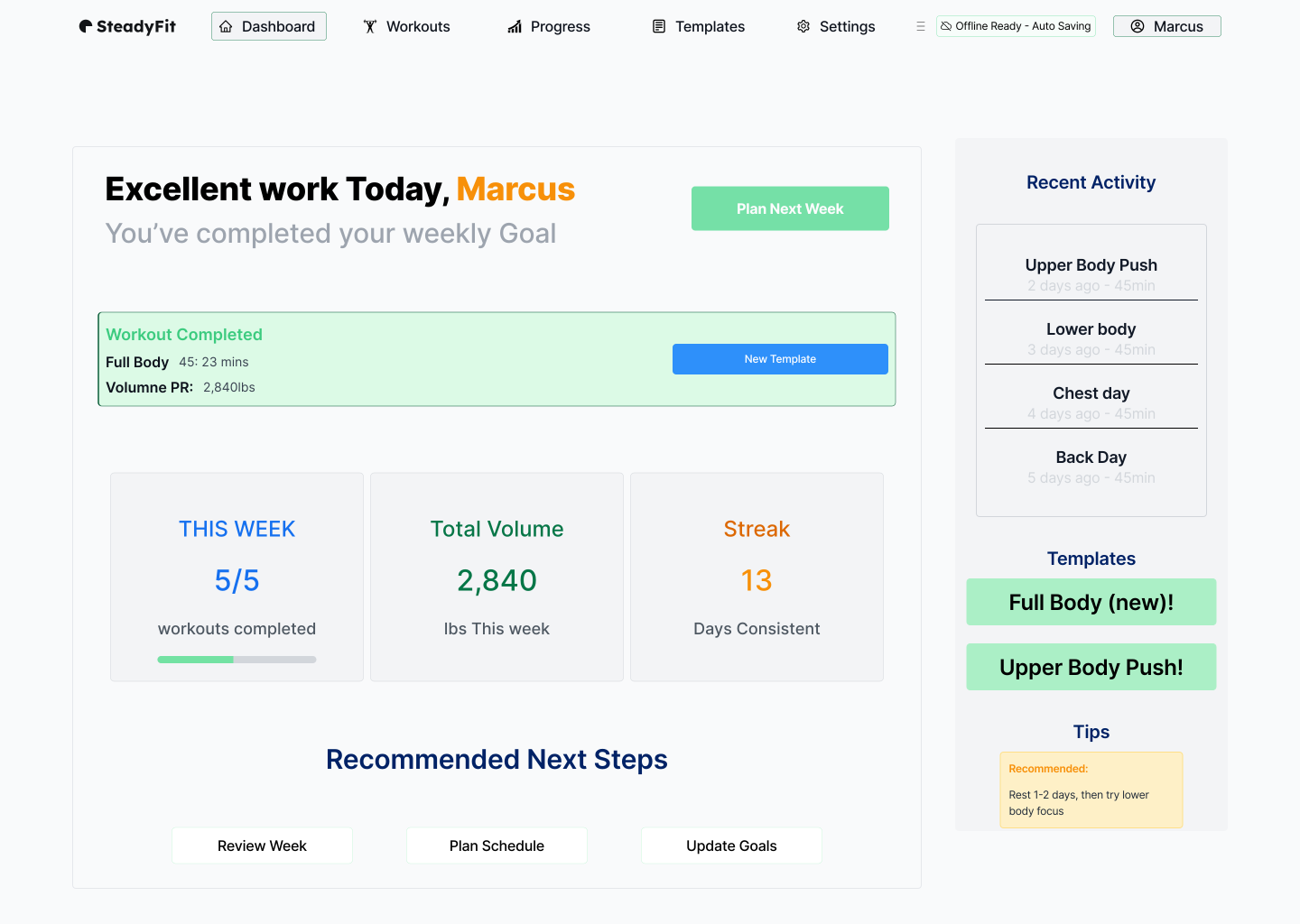
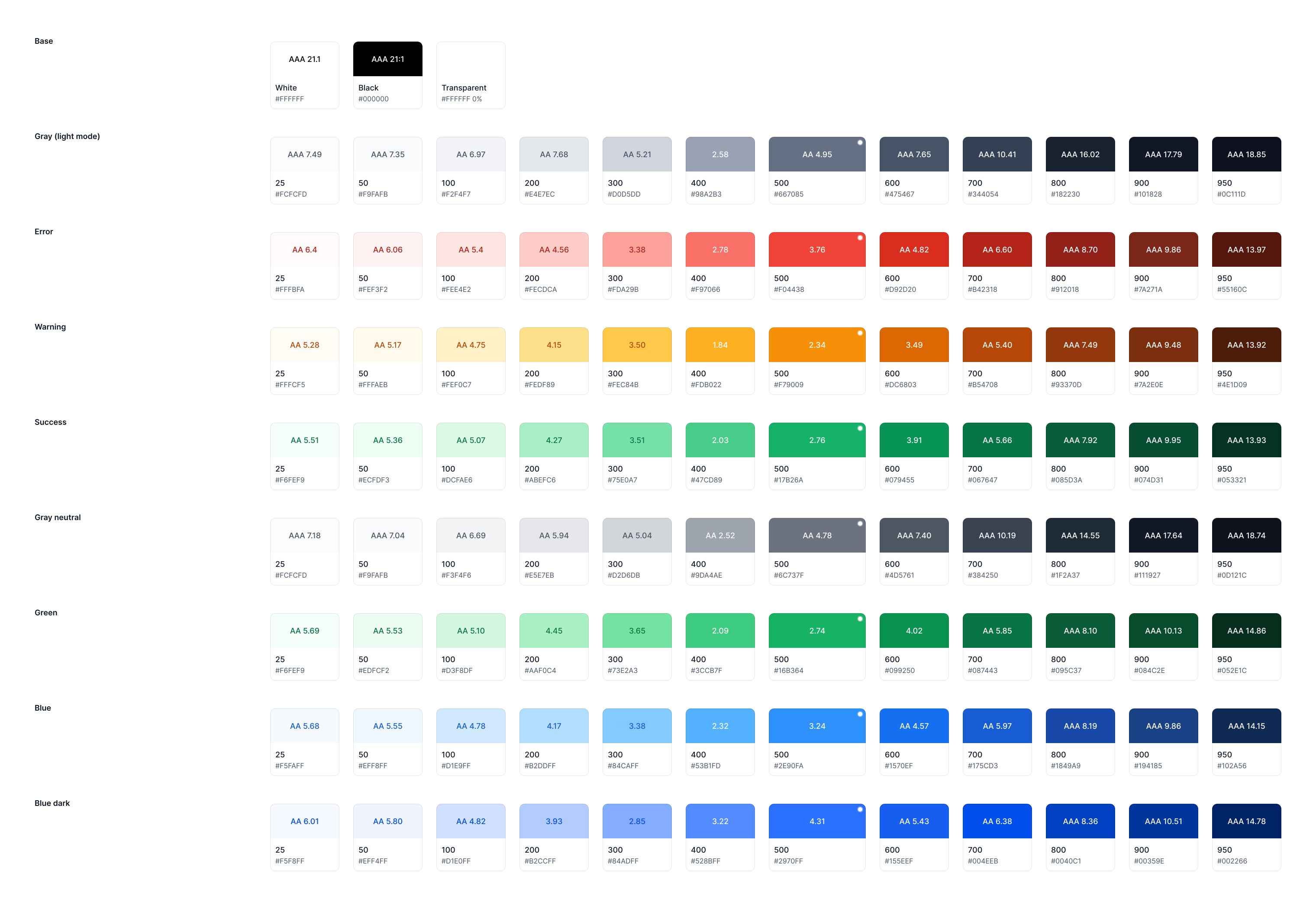
The color palette uses high-contrast colors for varied gym lighting: Primary Blue (#2E90FA) for actions, Success Green (#17B26A) for progress, Warning Orange (#F79009) for rest timers, and Error Red (#F04438) for destructive actions. Typography uses Inter font with 18px+ for active workout content and 600-700 weight for interactive elements. Desktop features three-column layout maximizing screen real estate for detailed analytics and bulk exercise management. Mobile optimizes for workout execution with bottom tab navigation, single-column flow, and prominent CTAs at screen bottom for thumb-zone accessibility.
Competitive Differentiation
SteadyFit stands apart through bulletproof data reliability (versus Strong's known loss issues), gym-optimized usability (large touch targets, offline-first), comprehensive analytics (versus Hevy's shallow approach), and smart exercise library with custom creation (versus Fitbod's confusing AI). At $6.99/month, we're positioned between free options and premium competitors while delivering superior reliability. Key design decisions: offline-first architecture ensures core features work without internet, progressive disclosure shows complexity gradually, custom exercise creation is prominently visible as search fallback, and minimal mid-workout UI reduces cognitive load during execution. Results & Next Steps
The design validation targets 95%+ unassisted task completion, sub-5-minute workout logging, 92%+ search success rate, and 75%+ 30-day retention versus the industry's 3-8%. MVP development focuses on core workout flow, exercise library with search, offline functionality, and basic progress tracking. SteadyFit proves fitness app retention isn't a mystery—users need reliability they can trust, usability that respects gym context, and intelligent features that enhance rather than replace human decision-making. By addressing fundamental failures in existing solutions, we've created a platform that serious lifters actually want to use long-term.